
What does Belief 19 say about the law of God?
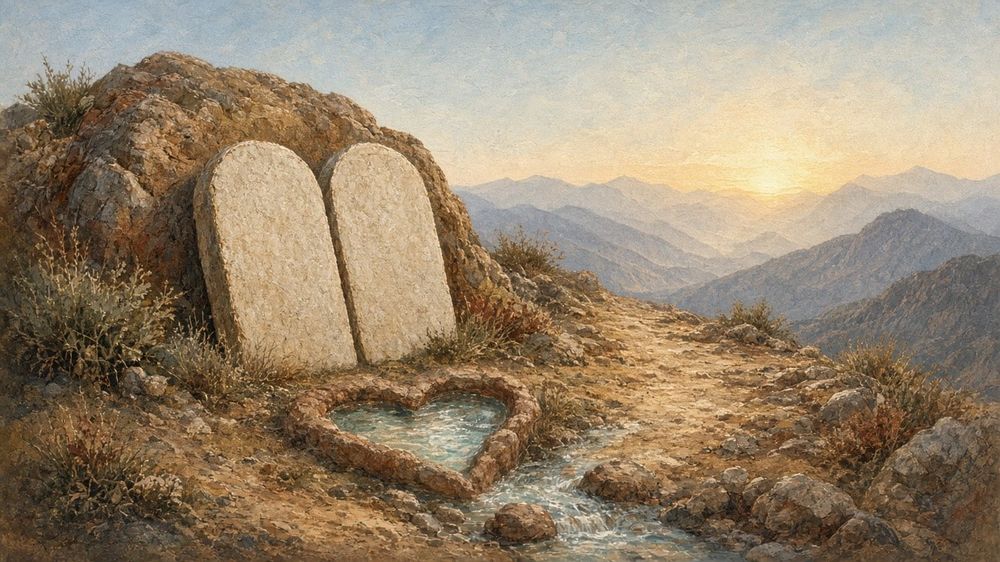
The voted statement says the Ten Commandments express God's love, will and purposes for all people in every age, and that salvation is all of grace, with obedience as its fruit.
In this article
1. Issue framed
Belief 19, "The Law of God," asks what the Ten Commandments are, who they bind, and how keeping them relates to being saved. Its short answer is that the commandments express God's love and are binding on everyone, and that salvation comes by grace alone, with obedience following as its fruit.
2. Documented positions in view
The voted statement. The current Fundamental Beliefs say: "The great principles of God's law are embodied in the Ten Commandments and exemplified in the life of Christ. They express God's love, will, and purposes concerning human conduct and relationships and are binding upon all people in every age. These precepts are the basis of God's covenant with His people and the standard in God's judgment. Through the agency of the Holy Spirit they point out sin and awaken a sense of need for a Saviour. Salvation is all of grace and not of works, and its fruit is obedience to the Commandments. This obedience develops Christian character and results in a sense of well-being. It is evidence of our love for the Lord and our concern for our fellow human beings. The obedience of faith demonstrates the power of Christ to transform lives, and therefore strengthens Christian witness."
The listed texts are Exodus 20:1-17; Deuteronomy 28:1-14; Psalm 19:7-14; 40:7, 8; Matthew 5:17-20; 22:36-40; John 14:15; 15:7-10; Romans 8:3, 4; Ephesians 2:8-10; Hebrews 8:8-10; 1 John 2:3; 5:3; Revelation 12:17; and 14:12. The same text and list appear in the 2025 Church Manual.
The 2025 Church Manual, official teaching on church life. The baptismal vow asks: "Do you accept the Ten Commandments as a transcript of the character of God and a revelation of His will? Is it your purpose by the power of the indwelling Christ to keep this law, including the fourth commandment, which requires the observance of the seventh day of the week as the Sabbath of the Lord and the memorial of Creation?" In its chapter on discipleship the Manual quotes Jesus, "If you love Me, you will keep My commandments" (John 14:15, as the Manual prints it in the ESV).
The official explainer. The church's page on the law of God is website teaching, not a Session vote. It says "The commandments show us God's character and love," and "The law does not restrict us, but rather it frees us from the traps of sin and selfishness."
Ellen White, in original books. In Patriarchs and Prophets (1890), chapter 27, she wrote: "The precepts of the Decalogue are adapted to all mankind, and they were given for the instruction and government of all." She described the ten as "all based upon the great fundamental principle of love." In The Desire of Ages (1898), chapter 31, she wrote: "God has given us His holy precepts, because He loves mankind." In Steps to Christ (1892), chapter 7, she wrote: "We do not earn salvation by our obedience; for salvation is the free gift of God, to be received by faith. But obedience is the fruit of faith."
3. Scriptural arguments attributed and compared
The belief lists these texts, quoted from the King James Version.
Love and will. In Exodus 20, God begins, "I am the Lord thy God, which have brought thee out of the land of Egypt," before He gives the ten (Exodus 20:2). Asked which commandment is greatest, Jesus answered: "Thou shalt love the Lord thy God with all thy heart... And the second is like unto it, Thou shalt love thy neighbour as thyself. On these two commandments hang all the law and the prophets" (Matthew 22:37-40). The psalmist says, "The law of the Lord is perfect, converting the soul," and "in keeping of them there is great reward" (Psalm 19:7, 11). Psalm 40, which Hebrews 10 applies to Christ, says, "I delight to do thy will, O my God: yea, thy law is within my heart" (Psalm 40:8). Deuteronomy 28:1-14 sets out blessings for those who "hearken diligently unto the voice of the Lord thy God."
Binding. Jesus said, "Think not that I am come to destroy the law, or the prophets: I am not come to destroy, but to fulfil," and "Till heaven and earth pass, one jot or one tittle shall in no wise pass from the law" (Matthew 5:17, 18). The statement lists these words, with Exodus 20, among its support for the line that the precepts are "binding upon all people in every age."
Obedience and salvation. Paul wrote: "For by grace are ye saved through faith; and that not of yourselves: it is the gift of God: Not of works, lest any man should boast. For we are his workmanship, created in Christ Jesus unto good works" (Ephesians 2:8-10). Romans 8:3, 4 says God sent His Son "That the righteousness of the law might be fulfilled in us, who walk not after the flesh, but after the Spirit." Jesus said, "If ye love me, keep my commandments," and "If ye keep my commandments, ye shall abide in my love; even as I have kept my Father's commandments" (John 14:15; 15:10). John wrote, "For this is the love of God, that we keep his commandments: and his commandments are not grievous" (1 John 5:3), and "hereby we do know that we know him, if we keep his commandments" (1 John 2:3).
Heart and witness. Hebrews 8:10 says, "I will put my laws into their mind, and write them in their hearts." Revelation 12:17 and 14:12 describe those "which keep the commandments of God" and "the faith of Jesus."
These texts agree on three things the statement also says: the law reflects God's love, grace comes first, and obedience follows from faith and love.
4. Historical and teaching context
The wording above is the current voted statement, reprinted as Belief 19 in the 2025 Church Manual. The Manual applies it through the baptismal vow, which is official teaching. The official explainer and Ellen White's books are not Session votes, but they point the same way. In The Desire of Ages she wrote that Jesus' mission was "to vindicate the sacred claims of that law," and Steps to Christ says "love is the principle of action" in a renewed heart.
5. Agreements and disagreements
The voted statement, the Manual, the explainer and Ellen White's books agree that the commandments express love, that all people are bound by them, and that salvation is by grace through faith. They put it in different words. The voted text says obedience is the "fruit" of salvation; Ellen White says obedience is "the fruit of faith"; the explainer says the law "frees us." Each source speaks for itself, and none presents a rival Adventist definition.
6. Implications and uncertainties
How it follows from Belief 18. Belief 18 says "the Bible is the standard by which all teaching and experience must be tested." One logical step leads to Belief 19: if the Bible is the standard, the church must say what the Bible teaches about God's law, and Belief 19 states that answer.
The voted statement keeps its focus on the law as a whole. It speaks of "the Ten Commandments" and does not discuss each commandment. The baptismal vow names the fourth commandment, and Belief 20 takes up the Sabbath next. The statement also says that obedience "develops Christian character" and "results in a sense of well-being," but it does not say how those results are measured.
7. Limits — no doctrinal ruling
This examination issues no final doctrinal ruling.
Tip: press and hold any sentence to flag it as unclear.Tip: select any sentence to flag it as unclear.
Comments (0)
No comments yet. Be the first.
Thank you. Your comment will appear shortly after review.
Read next

What does Belief 12 say the church is?
The voted statement calls the church a community of people who confess Jesus as Lord, and that article sits between the beliefs about salvation and the beliefs about the remnant and unity.
 MaraTheology

What does Belief 20 say about the Sabbath?
The voted statement says the seventh-day Sabbath is a Creation memorial and part of the fourth commandment, kept in the pattern of Jesus, as a sign of sanctification and loyalty, from sunset to sunset.
MaraTheology