
Vietnam weighs a law requiring national digital ID for online banking, telecoms and more
Lawmakers debated the draft on Nov. 4. Here is what the official record shows, and what it does not.
One-minute summary
- On Nov. 4, 2026, Vietnam's National Assembly debated a draft Law on Electronic Identification and Authentication [1].
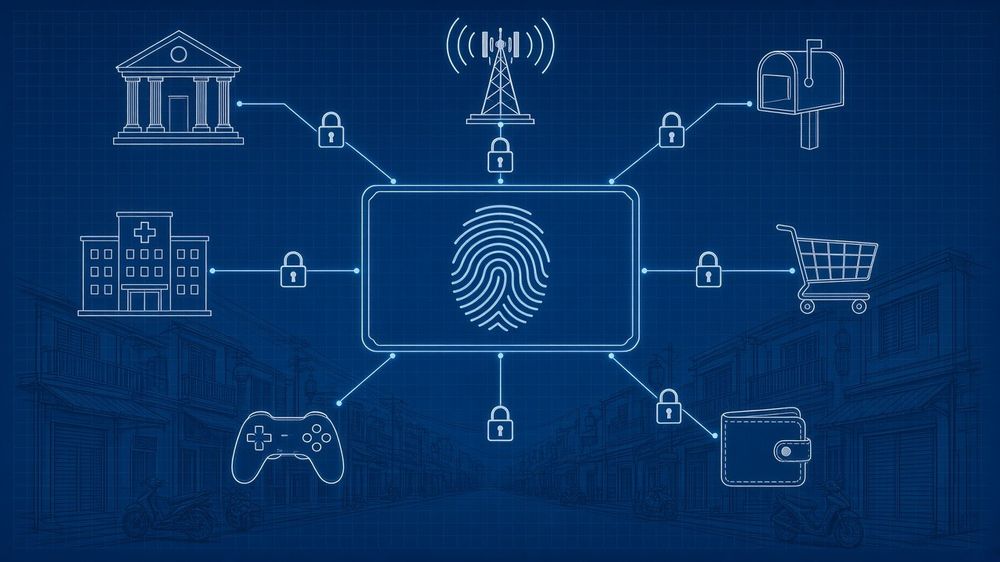
- As the Ministry of Public Security describes it, the draft would require online accounts in 11 named fields, and other "high-risk" fields, to be authenticated with and linked to the national electronic identity [3].
- The minister told lawmakers the draft limits data collection and requires consent [3, 4].
- The bill has not passed. The Assembly lists adoption as expected this session [2].
- The reports say nothing about religion, worship or a day of rest.
What it says
- The Assembly debated the draft on Nov. 4, 2026 [1].
- As the ministry describes Article 23(5), accounts in 11 named fields, and in other high-risk fields, must link to the national identity [3].
- The state can create an identity from existing records [3].
- Officials say the draft collects minimum data with consent [3, 4].
What it doesn’t say
- The law has not passed, and the text could still change [2, 3].
- The official reports do not mention religion, worship, church membership or a weekly rest day.
- We did not open a full official draft. Article numbers come from the ministry's account [3].
The draft comes from the Ministry of Public Security, which also runs the national VNeID system [2, 5]. According to the National Assembly's portal, the version debated on Nov. 4 has eight chapters and 46 articles. It also amends several existing laws, including the identity card law [1].
After the debate, Minister of Public Security Lương Tam Quang answered lawmakers. The ministry's report of his remarks, in Vietnamese, covers three points [3].
Who gets an identity. State agencies would assign electronic identities to organizations, individuals, places, and certain data and goods. When a person's details are already complete and accurate in a national database, the state would create the identity automatically [3].
Where linking is required. The report cites Article 23(5). Accounts used online in these fields would have to be authenticated with the national identity and linked to it: securities, telecoms, banking, postal services, e-commerce, medical care, payment intermediaries, e-wallets, crypto assets, online games and domain names. The clause also covers other fields that carry high risk or create significant legal obligations [3].
Privacy. In Viet Nam News's English rendering, the minister said: "The draft law has designed multiple layers of privacy protection." He said minimum data collection "must have the consent of the data subject" [4]. Biometric Update reports open questions about how consent works when authentication is mandatory [5]. Viet Nam News reports that deputies also raised concerns about AI-faked biometrics and about who is responsible for wrong AI results [4].
The drafting agency will take in deputies' comments before the text is finished [3, 4]. Biometric Update reports that a separate decree, in force since Sept. 28, already requires certain accounts to be linked to VNeID [5].
Adventist faith and liberty context
Digital ID laws often prompt questions in churches about the "mark of the beast." Adventist teaching gives a specific frame for that.
In voted church teaching, Scripture is the standard, and the time of Christ's return "has not been revealed" [7]. The General Conference's 1995 statement supports liberty of conscience for all, "including those with whom we may disagree" [6].
Adventist prophetic interpretation has historically tied the mark to worship and God's law, not to a device or database. Ellen White wrote that "whoever shall trample upon God's law to obey a human enactment receives the mark of the beast," and that "The Sabbath will be the great test of loyalty" [8, pp. 604–605]. That is the church's historical reading of Revelation 13–14, not a statement about any current law.
Members can weigh Vietnam's draft on its own terms. It raises real questions about privacy, consent and state power, and about people who cannot link an account. No official record ties it to worship.
Tip: press and hold any sentence to flag it as unclear.Tip: select any sentence to flag it as unclear.
Comments (0)
No comments yet. Be the first.
Thank you. Your comment will appear shortly after review.
Read next

Scottish Parliament says it is not its place to legislate what women wear
A motion asking the government to weigh limits on the burqa and niqab was rewritten on Nov. 4. Here is what the official record shows, and what it does not.
 SethLiberty Watch

Claim Check: Did churches in India pressure the government to fine Sunday vendors?
Advent Messenger says churches put "immense pressure" on the government to fine vendors who traded during Sunday worship hours. Local reports confirm a vendors' association imposed fines after church complaints — and that district officials said the association had no authority to do so.
 Ruth