
1. Senate committee holds the Right to Worship Act a second time
S. 5289 would bar knowingly disrupting worship within 100 feet of a house of worship's entrance and let private parties sue. The Senate Judiciary Committee held it on Nov. 10 and Nov. 17. Several faith groups say it would chill lawful protest.

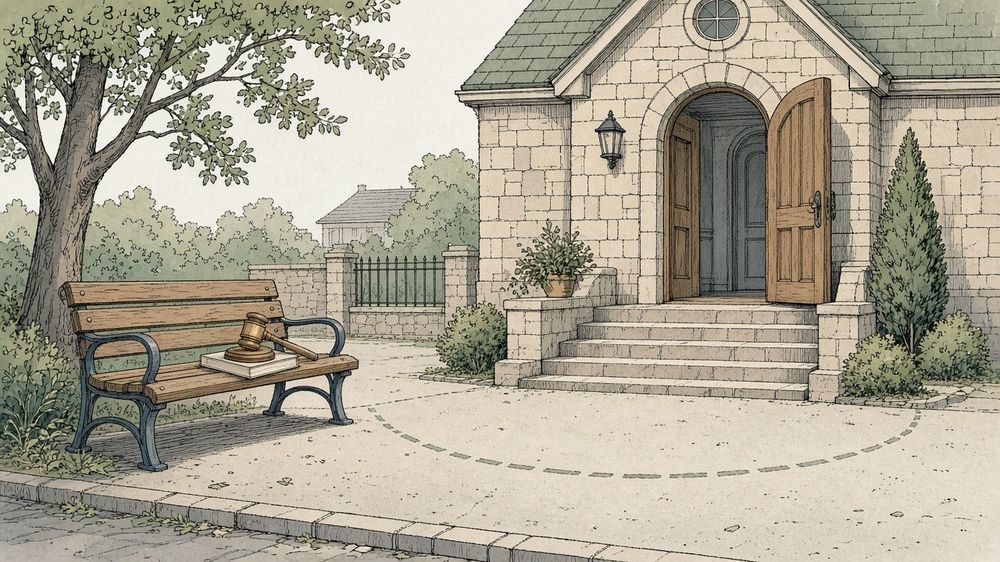
One-minute summary
The Right to Worship Act (S. 5289), introduced Aug. 6 by a Texas Republican and a Michigan Democrat, would make it unlawful to knowingly disrupt a scheduled religious service, or keep people from attending, within 100 feet of a house of worship's entrance, from an hour before to an hour after. Violators would face civil fines and private lawsuits. The Senate Judiciary Committee listed the bill for votes on Nov. 10 and Nov. 17. Its official results show it was "HELD" both times, and it is now on the Nov. 24 agenda. Muslim, Jewish, Baptist and Sikh groups have urged senators to oppose it.
What it says
What it doesn't: Its penalties are civil, not criminal. It does not ban all speech near houses of worship (section 2(c)). The committee has not voted on it, and the only bill text published on govinfo is the version introduced Aug. 6.
Section 2(b) of the bill makes it unlawful for any person, "within 100 feet from any pedestrian or vehicular entryway of any house of worship," during the period "beginning 1 hour before the start of and ending 1 hour after the conclusion of a scheduled religious service," to knowingly disrupt that service or knowingly impede people from attending it.
The definitions are broad. A "religious service" includes "any collective worship or prayer service, class, or other event" where people gather to worship, study or exercise their religion. Under section 2(a)(2)(B), whether conduct is a disruption is judged by "volume, duration, pervasiveness, frequency, and impact, rather than by the content of any speech." Section 2(c) says it does not stop anyone "from freely speaking on any subject" within its limits.
Penalties: under section 2(d), the U.S. Attorney General would assess civil fines of $2,500 for a first offense, $5,000 for a second and $10,000 per occurrence after that. Section 2(e)(1) gives "Any person aggrieved" a right to sue in federal court for injunctions, compensatory and punitive damages and attorney fees, or statutory damages of "$5,000 per violation." Federal and state attorneys general could also sue.
The committee's results for Nov. 10 and Nov. 17 both list the bill as "HELD pursuant to Committee Rule I.3." In his prepared Nov. 17 statement, the committee chairman said: "I understand that there's disagreement about the scope of protections that'd been afforded in the Right to Worship bill. It's being held over so that Ranking Member Durbin and Senator Cruz's offices can continue to work through those differences, but I'm hopeful we can vote on it at an upcoming markup." The bill is listed again for Nov. 24; Jewish Insider reported on Nov. 17 that a vote is expected the week of Nov. 30.
On Nov. 5, the Muslim Public Affairs Council and Bend the Arc: Jewish Action said the bill's "broad language, 100-foot restrictions, and private right of action risk chilling lawful speech, peaceful assembly, and political protest, including on public sidewalks and streets." A Nov. 16 letter, also signed by the Cooperative Baptist Fellowship, Interfaith Alliance and the Sikh Coalition, said "recent amendments do not eliminate the danger it poses." Jewish Insider reported that the bill has support from groups of many faiths, including the Islamic Society of North America.
Adventist faith and liberty context
Church teaching. Fundamental Belief 20 describes the Sabbath as "the day of rest, worship, and ministry." The church's 1995 Religious Freedom statement says Adventists have "the right to freedom of religion, subject to the equal rights of others." This includes "the freedom to meet for instruction and worship" and "to disseminate religious views by public preaching." It pledges to defend "the religious liberty of all people, including those with whom we may disagree."
Interpretation, not church teaching. The bill touches both sides of that statement: the freedom to gather undisturbed and the freedom to speak in public, including religious speech near other faiths' buildings. Faith groups disagree on whether it strikes the right balance.
Tip: press and hold any sentence to flag it as unclear.Tip: select any sentence to flag it as unclear.
Comments (0)
No comments yet. Be the first.
Thank you. Your comment will appear shortly after review.
Read next
Claim Check: Did Congress invite Pope Leo XIV to give a joint-session address?
Adventist commentary says Democrats and Republicans have invited the pope to address Congress. An Oct. 30 letter from 91 House members asks House leaders to extend an invitation. In the reports opened for this check, no invitation has been announced.
 Ruth

Claim Check: Did churches in India pressure the government to fine Sunday vendors?
Advent Messenger says churches put "immense pressure" on the government to fine vendors who traded during Sunday worship hours. Local reports confirm a vendors' association imposed fines after church complaints — and that district officials said the association had no authority to do so.
Ruth