
How Adventist Community Services fits into the VOAD disaster network
Church and coalition documents describe ACS as a founding National VOAD member that works through state VOADs and emergency managers, with requests moving from local churches up to conferences, unions, and the division.
In this article
Documents examined
- The North American Division's November 8, 2026 report on flood coordination in Arizona, Colorado, and New Mexico. [1]
- Adventist Community Services pages on disaster response, its history, and its deployment protocol, plus its job description for a local church disaster response coordinator. [2; 3; 4; 5]
- A Columbia Union Conference page describing ACS disaster response. [6]
- National VOAD's About Us, member, state and territory VOAD, and frequently asked questions pages, and its 2015 guide to developing a VOAD. [7; 8; 9; 10; 11]
- FEMA's National Response Framework page and its Emergency Support Function #6 annex, dated June 2016. [12; 13]
- Florida's 2024 state emergency plan annex for volunteers and donations. [14]
Adventist Community Services, or ACS, calls itself the official community outreach ministry of the Seventh-day Adventist Church in the North American Division. That territory covers the United States, Canada, Guam and Micronesia, and Bermuda. Its disaster work is a ministry within ACS. An ACS job description says ACS is not the same as ADRA, the church's international relief agency, and calls ACS the legal entity under which Adventists respond to disasters in the United States and Bermuda. [3; 5]
What VOAD is
VOAD stands for Voluntary Organizations Active in Disaster. National VOAD says it was formed after Hurricane Camille struck the Gulf Coast in August 1969, when groups served survivors on their own and help arrived “haphazardly.” In 1970, seven national disaster response organizations met to coordinate better. National VOAD describes itself as a forum for sharing knowledge and resources across preparation, response, and recovery. [7]
National VOAD says members must agree to abide by its Points of Consensus, minimum standards on topics such as mass care and donations management. Its stated values are the “4Cs”: cooperation, communication, coordination, and collaboration. [10; 11]
What a state VOAD does
National VOAD has an affiliate in every state and territory. Its 2015 guide says state VOADs promote training and preparedness when there is no disaster and help coordinate response and recovery when one strikes. A state VOAD may include local groups with no national program. It often acts as a go-between for its members and state government. Recognized state VOADs, the guide says, have a charter and agreement with National VOAD. [10; 11]
The guide also sets limits on government's role. Government partners “do not supervise, prepare agendas for, serve as voting officers, or direct the activity of the VOAD.” A state VOAD in good standing is expected to work closely with the state emergency management agency and FEMA, and to convene its members when a state or federal disaster is declared. The guide says each of FEMA's ten regions has a Voluntary Agency Liaison who helps strengthen state VOADs. [11]
How ACS says it is organized
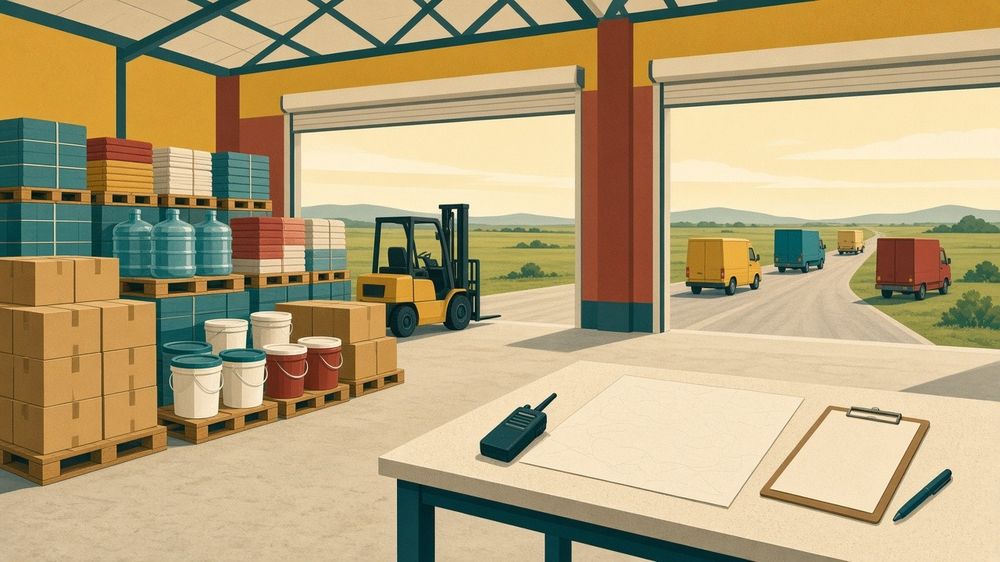
ACS says its local disaster teams are coordinated through a local church or ACS center, then the conference, then the union conference. It names donations management through multi-agency warehouses and collection and distribution centers as its expertise. It says it has also helped, when asked, with feeding, chainsaw teams, debris cleanup, temporary roofing, volunteer reception centers, and home repair. [2]
The ACS deployment protocol describes the order of requests. When a disaster strikes, the local church team confers with its conference director about what it can do. The conference director coordinates any added ACS help. When a need overwhelms the conference, the director asks the union director, the division's ACS disaster director, or both. For trained emotional and spiritual care teams, the protocol says requests may come from state or national VOAD representatives, emergency management authorities, or nonprofit groups. Those requests pass through ACS directors to the division disaster director, and the final list of volunteers needs union and national approval. [4]
At the local level, ACS's coordinator job description, released in November 2010, says the coordinator is elected by the local church and leads responses to small disasters, “typically up to 10 families.” The coordinator is told to build ties with city and county emergency managers and with local VOADs or Community Organizations Active in Disaster, often called COADs. It notes that some states also have regional VOADs. [5]
The Southwest floods as a current example
The NAD's November 8 report, which Puls Strøm has covered, shows that structure in a proposed plan. [1; 15] According to the report, division and local ACS leaders met November 3 with the Mid-America, Southwestern, and Pacific unions. The Arizona Conference is developing a way to take requests from residents. Arizona VOAD “would be the first avenue” for matching those requests with established disaster groups. Needs better suited to Adventist resources, or not met through that network, would go to Adventist conferences and ACS partners. The report also proposes coordination with emergency management agencies and ACS and VOAD partners in Colorado and New Mexico. The report describes a process being developed, not one it says is already running. National VOAD's state list includes entries for Arizona VOAD and Colorado VOAD. [1; 9]
Where ACS sits in federal and state plans
FEMA's National Response Framework groups federal support into Emergency Support Functions. ESF #6 covers mass care, emergency assistance, temporary housing, and human services. It applies when survivors' needs exceed what local, state, tribal, and territorial governments can supply. [12; 13]
The June 2016 ESF #6 annex names FEMA and the American Red Cross as primary agencies. It lists National VOAD as a support agency that can send liaisons to FEMA locations. Within its National VOAD entry, it gives each member a short role. For ACS, the annex says it receives, processes, and distributes clothing, bedding, and food, and provides emergency food, counseling, and disaster childcare. Other entries show the division of labor. The Salvation Army is listed for sheltering, feeding, and supply distribution. Southern Baptist Convention Disaster Relief is listed with “more than 200 mobile feeding units.” Mennonite Disaster Service is listed for cleanup and home repair. [13]
A state plan shows how a warehouse role is written down. Florida's 2024 volunteers and donations annex names Volunteer Florida as its primary agency. It lists the Florida Conference of Seventh-day Adventists as a support agency for warehouse and volunteer management. It says the state runs a multi-agency donations warehouse through a memorandum of understanding with ACS and the Florida Division of Emergency Management. ACS provides the warehouse management team, and Florida may ask for more ACS warehouse help through National VOAD. The annex describes that agreement but does not include its text. [14]
The Columbia Union page says ACS disaster response works under memorandums of understanding with FEMA, the American Red Cross, and many state emergency management agencies. It does not link or quote those agreements. [6]
How the role has changed over time
National VOAD's 2015 guide says the seven founders met on July 15, 1970, at American Red Cross national headquarters. It lists the founders as the American Red Cross, the Christian Reformed World Relief Committee, Mennonite Disaster Service, the National Disaster Relief Office of the Roman Catholic Church, the Seventh-day Adventist Church, the Southern Baptist Convention, and the St. Vincent de Paul Society. [11]
The founding name was the church, not ACS. That fits ACS's own history. ACS says the church's welfare work became Seventh-day Adventist Health and Welfare Services in 1953 and was renamed Adventist Community Services in 1972, two years after National VOAD formed. [3] ACS's disaster page calls ACS a founding member of “NVOAD (National Volunteer Organizations Active in Disasters).” The coalition's own name is National Voluntary Organizations Active in Disaster. [2; 7]
The coalition around ACS has also grown, though its own counts differ. The 2015 guide counted 111 members as of July 2013: 55 national organizations and 56 state and territory VOADs. FEMA's 2016 annex counted 104: 50 national and 54 state and territorial. National VOAD's About Us page now says “70+” national organizations and 56 state and territory VOADs. Its FAQ says “over 130 members.” Its online member list shows 81 entries, with Adventist Community Services first, and its state and territory list shows 57. The pages do not explain the differences. [7; 8; 9; 10; 11; 13]
The descriptions of ACS's work also differ by document. FEMA's 2016 annex listed ACS for clothing, bedding, and food, plus counseling and childcare. ACS's current page leads with warehouse-based donations management and adds cleanup, roofing, volunteer reception, and repair. [2; 13]
Tip: press and hold any sentence to flag it as unclear.Tip: select any sentence to flag it as unclear.
Comments (0)
No comments yet. Be the first.
Thank you. Your comment will appear shortly after review.
Read next

How a division fills a leadership vacancy between General Conference Sessions
Under the world church's rules, a division's own executive committee fills a vice president's seat in the middle of a term, while an empty president's, secretary's or treasurer's seat goes to the General Conference Executive Committee, and unions and local conferences fill theirs through their own executive committees.
 EliInstitutions

Southern Asia-Pacific Adventists approve local coordinators for Muslim relations
The Southern Asia-Pacific Division voted at its Annual Council to let local churches in Muslim-majority territories elect Adventist-Muslim Relations coordinators, its news service reported.
 RuthNews Update